
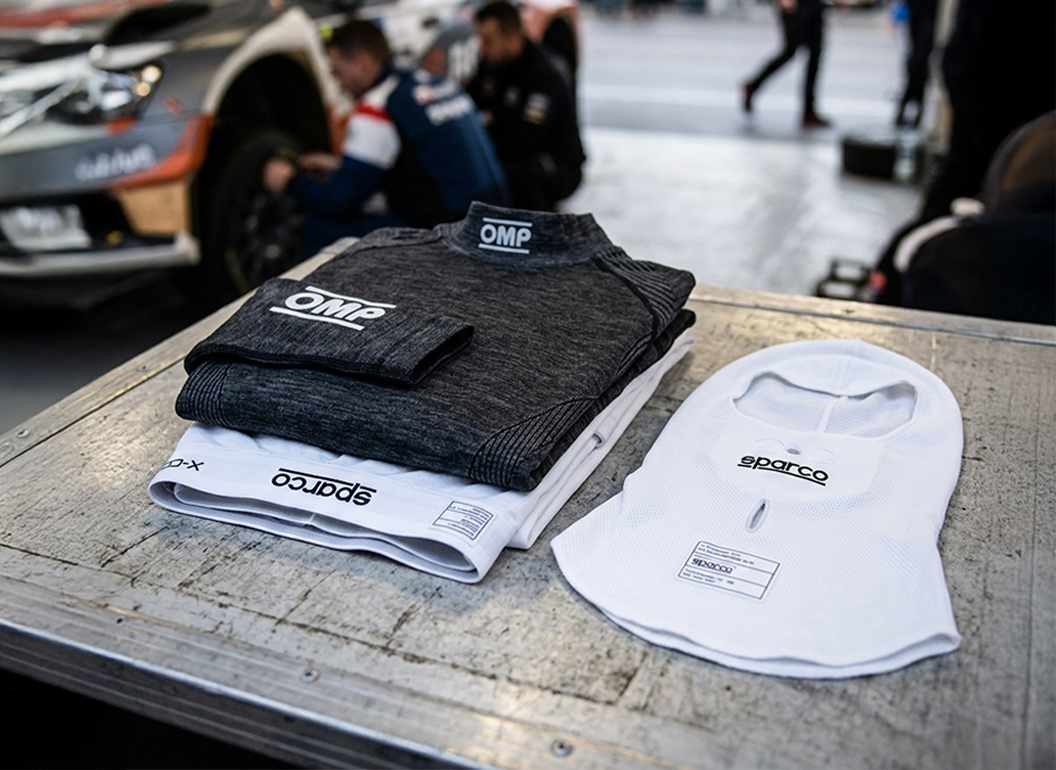
Many consider the’fire-retardant underwear as a simple regulatory obligation. In reality, T-shirts, tracksuit bottoms e fire retardant socks are active elements of the safety and thermal comfort. Along with the tracksuit, they form a multilayered system that protects the pilot and optimises their performance.
Keep reading to find out why it's so important and how to choose the right one for your next race!
Underwear and thermal barrier
The primary function of flame-retardant underwear is to act as a shield against radiant heat and open flames. Protection does not depend solely on the individual garment, but on the synergy of two key factors:
- The multi-layer system: the overlap between the under-suit and the racing suit It creates an air gap that acts as thermal insulation. This air cushion drastically slows down the transfer of heat to the skin, extending the duration of protection in an emergency.
- FIA Regulation 8856-2018: This standard, which is the most recent and stringent, requires much more rigorous heat resistance tests compared with previous type-approvals. Garments complying with this standard are designed to provide vital extra seconds to allow for a safe evacuation from the passenger compartment.
Comfort and breathability: heat management
During a special test, body temperature rises rapidly. Modern flame-retardant underwear has made great strides in terms of:
- Sweat excretion: the aramid fibres Those used in flame-retardant clothing are often combined with others technical fibres to help wick away moisture. The aim is to keep the skin as dry as possible, reducing the sensation of heat and improving concentration whilst driving.
- Temperature control: A high-quality base layer helps to maintain a more stable body temperature, minimising the feeling of overheating during summer races and providing a little extra insulation in colder conditions.
How to choose the right flame-retardant underwear
Not all of the’fire-retardant underwear It’s the same. The main differences lie in the materials, weight and ergonomics.
Fabric weight and structure
Standard models use more structured fabrics, which are generally sturdier and have a firmer texture. The “lightweight” lines” They use thinner, lighter fibres, reducing weight and bulk under the suit, improving breathability and maximising heat exchange.
Ergonomics and construction
Comfort depends largely on the garment’s construction.
- Flat-lock seams: This sewing technique eliminates any raised fabric inside the garment. It is a crucial detail for preventing skin irritation in the areas where seatbelts exert the greatest pressure on the body (the shoulders and hips).
- Ergonomic or seamless cut: The reduced number of seams and the use of pre-curved panels ensure that the base layer fits like a second skin. A proper fit prevents creases from forming, which could be uncomfortable whilst riding.
Tips for looking after your base layers
To ensure that the fire-retardant properties are not compromised, it is important to follow a few guidelines: use lukewarm water and mild soaps when washing, and avoid using fabric softener, as this can clog the fibres and reduce their breathability.
Whilst drying, do not expose the garments to direct sunlight for prolonged periods, as UV rays can weaken the technical fibres.
Conclusions
Flame-retardant underwear It’s the starting point for your race kit: a layer that works quietly in the background, but makes all the difference when it really counts.
On Prodriveshop you’ll find a a selection of FIA-approved underwear Designed to support you through every challenge.
If you have any doubts or are looking for specific advice, we’re here to help you make the right choice.