
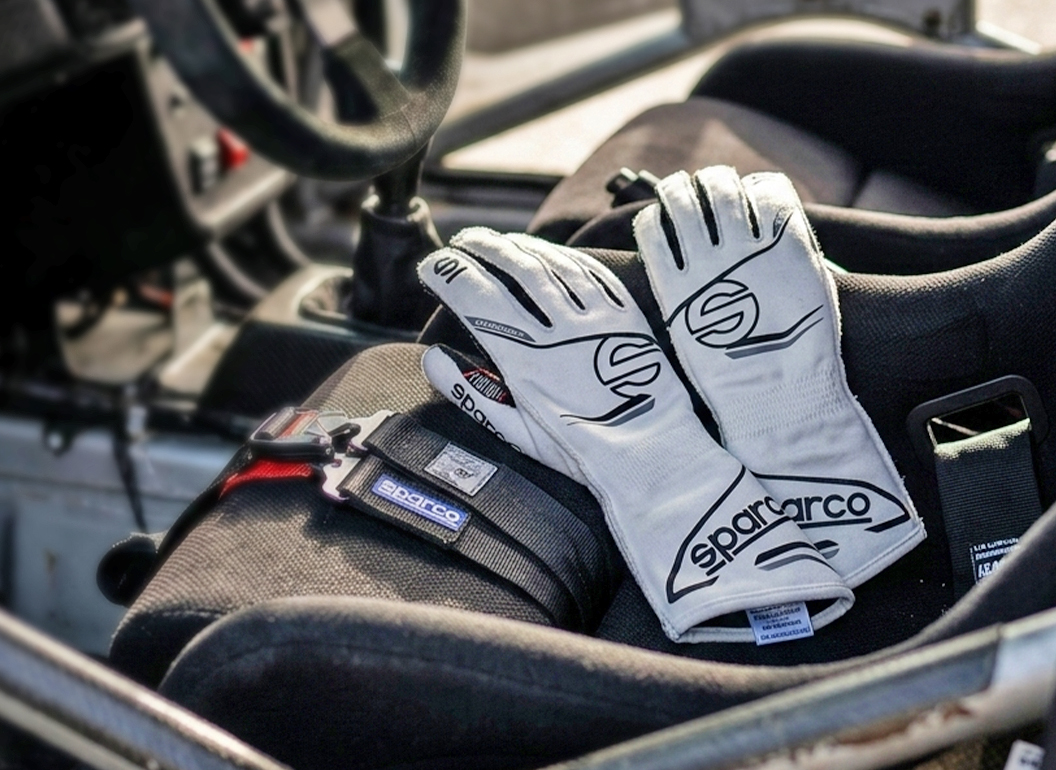
In the world of rallying, the connection between the driver and the car happens through two points: the feet on the pedals and the hands on the steering wheel. Choosing the rally gloves correction is not just a matter of style or respecting FIA regulations, but directly concerns the Driving sensitivity, comfort and, above all, safety.
In this guide, we’ll take a look at how to navigate the various styles and materials available, and discover the secrets to finding the perfect fit.
Why are rally gloves essential?
Many beginners underestimate the importance of specialist gloves. Yet, in addition to the mandatory flame-retardant protection, technical gloves fulfil three crucial functions:
- Constant grip: They prevent sweaty hands from slipping on the steering wheel during quick manoeuvres.
- Fatigue reduction: They absorb some of the vibrations transmitted by the steering column.
- Protection: In the event of a fire, they provide precious seconds of thermal protection.
Materials and construction of rally gloves
Flame-retardant aramid fibres
The basis of every approved glove is the aramid fibre, a high-performance synthetic fabric capable of withstanding extreme temperatures without melting or transferring heat directly to the skin. Leading brands such as Sparco e OMP, are constantly working on the density of these fibres:
- In entry-level models:An aramid fibre construction with a higher grammage is preferred, designed to ensure strength, mechanical resistance and greater durability. The thickness of the fabric provides reliable thermal protection, making the gloves suitable for amateur use or occasional track sessions, where the product’s robustness is the priority.
- In the top-of-the-range models: Aramid fibres with more advanced weaves and lower grammages are used to reduce weight and bulk without compromising safety. The construction is more flexible and form-fitting, improving sensitivity and precision whilst riding. Furthermore, the increased breathability aids heat dissipation and helps keep the hand dry, ensuring a consistent grip.
Internal or external seams
This is one of the most important technical distinctions:
- Internal stitching: They are the standard for entry-level and mid-range models. They offer a sleeker, more compact design, but the fabric edges on the inside may, over time, cause minor discomfort or pressure points during long rides.
- External stitching: It’s the professionals’ choice. With the fabric edges on the outside, the inner surface that comes into contact with your fingers is perfectly smooth. This eliminates pressure points and enhances sensitivity when using the buttons on the steering wheel or control panel.
Buying guide: technical aspects to consider
| Feature | Description | Advantage |
| Pre-curved cut | The glove follows the natural curve of the hand at rest. | It reduces fabric creases when holding the steering wheel, reduces muscle fatigue and improves precision in micro-movements. |
| Elasticated cuff | A flexible design without bulky straps. | It makes it easier to put on and improves the fit with the suit’s sleeve; it ensures greater freedom of movement. |
| Palm with silicone inserts | Non-slip silicone inserts in the areas of the steering wheel that are most frequently touched. | It increases grip, improves control and reduces the effort required to maintain a firm grip, especially when you’re sweating. |
Tips for choosing the right size
Getting the fit of your rally gloves right is essential: a glove that is too tight restricts blood circulation and tires the hand, whilst one that is too loose creates creases on the palm that reduce grip and precision.
- How to measure: Measure the circumference of your hand at the knuckles (excluding the thumb) using a tape measure.
- Check the brand: The fit varies between manufacturers. Always check the size chart specific to each brand, which can be found on our product pages.
- “Second-skin” effect: The glove should fit snugly. Bear in mind that the aramid fibres stretch slightly after the first few uses, moulding to the shape of your hand.
Technical advice: If you’re between two sizes, choose the larger size for gloves with internal seams and the size that fits you best for those with external seams.
Conclusion
In conclusion, gloves are not merely an accessory, but a technical tool that affects control, precision and concentration.
In addition to the choice of materials and construction, it is essential to check that the type-approval complies with the legislation FIA 8856-2018, so as to avoid problems during the technical inspection.
Preparation and attention to detail are just as much a part of the performance as the driving itself.